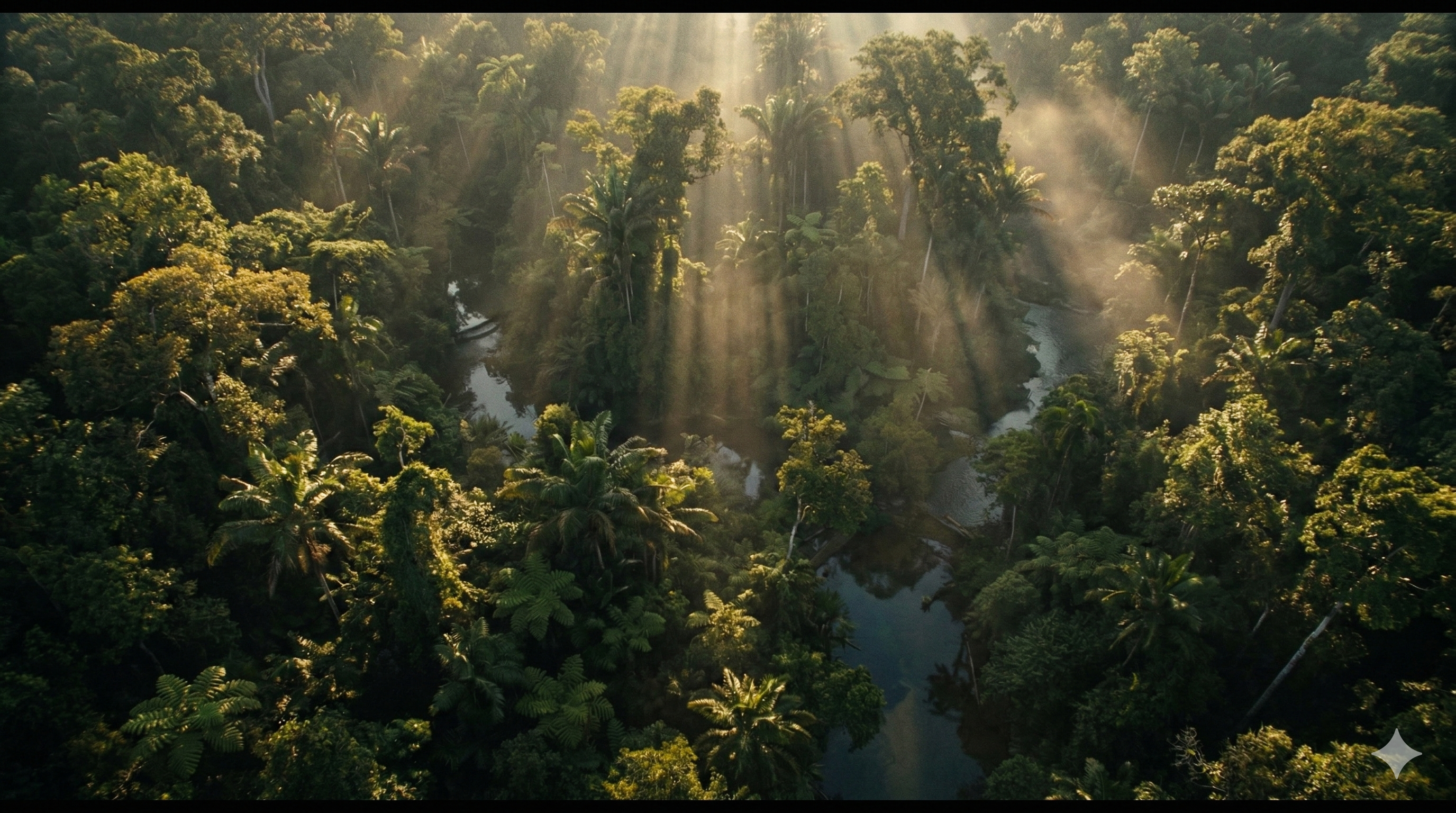
The Galápagos
of Indonesia.
Siberut Island — 150 km off western Sumatra — has evolved in isolation for hundreds of thousands of years. MCF is being established to ensure its irreplaceable ecological and cultural heritage survives the next century.
Hectares currently protected
National Park — est. 1993
Of island landmass protected
Target: 85%
Of mammals endemic
Found nowhere else on earth
UNESCO Biosphere designation
Man & the Biosphere programme
A History of Global Recognition
The foundation was laid
decades ago.
UNESCO Biosphere Reserve
In recognition of its extraordinary convergence of ancient indigenous culture and unique biodiversity, Siberut was designated under UNESCO's Man and the Biosphere programme — one of the first sites in Southeast Asia to receive this distinction.
"Like fish and water, our lives are inseparable from the forest and the land."
Siberut National Park
Following UNESCO recognition, the western portion of the island was officially gazetted as Taman Nasional Siberut. The park currently covers 190,500 hectares of pristine dipterocarp rainforests, ancient sago swamps, and extensive mangrove ecosystems.
Dipterocarp
Rainforest
Sago
Swamps
Mangrove
Ecosystems
Evolutionary Isolation
The treasures
we protect.
Separated from the mainland for hundreds of thousands of years, Siberut's biodiversity has diverged into forms found nowhere else on earth.
Of all mammals endemic
A rate of endemism comparable only to truly isolated island systems
Bird species recorded
19 endemic — including several globally threatened species
Endemic primate species
All four classified as threatened or critically endangered
Four Endemic Primate Species — Found Nowhere Else on Earth
Kloss's Gibbon
"Bilou"
Critically endangered. Known for its haunting territorial calls heard across the forest canopy at dawn.
Pig-tailed Snub-nosed Monkey
"Simakobu"
One of the rarest primates on earth. Entirely restricted to the Mentawai Islands.
Mentawai Leaf Monkey
"Joja"
Arboreal and highly specialised, dependent on undisturbed primary forest. Vulnerable to fragmentation.
Mentawai Macaque
"Bokkoi"
Found across Siberut and the southern Mentawai islands. A keystone seed-disperser for the forest.
Primate Conservation
Four species.
No second chances.
Siberut's four endemic primate species represent one of the most concentrated assemblages of threatened primates on earth — all of them found nowhere else. All four are classified as threatened or critically endangered. All four are losing ground to logging, hunting, and fragmentation simultaneously.
MCF is committed to establishing a dedicated Siberut Primate Research and Rehabilitation Centre — a permanent scientific facility embedded within the protected zone, combining field research, population monitoring, rescue and rehabilitation, and community-based anti-hunting programmes into a single, integrated operation.
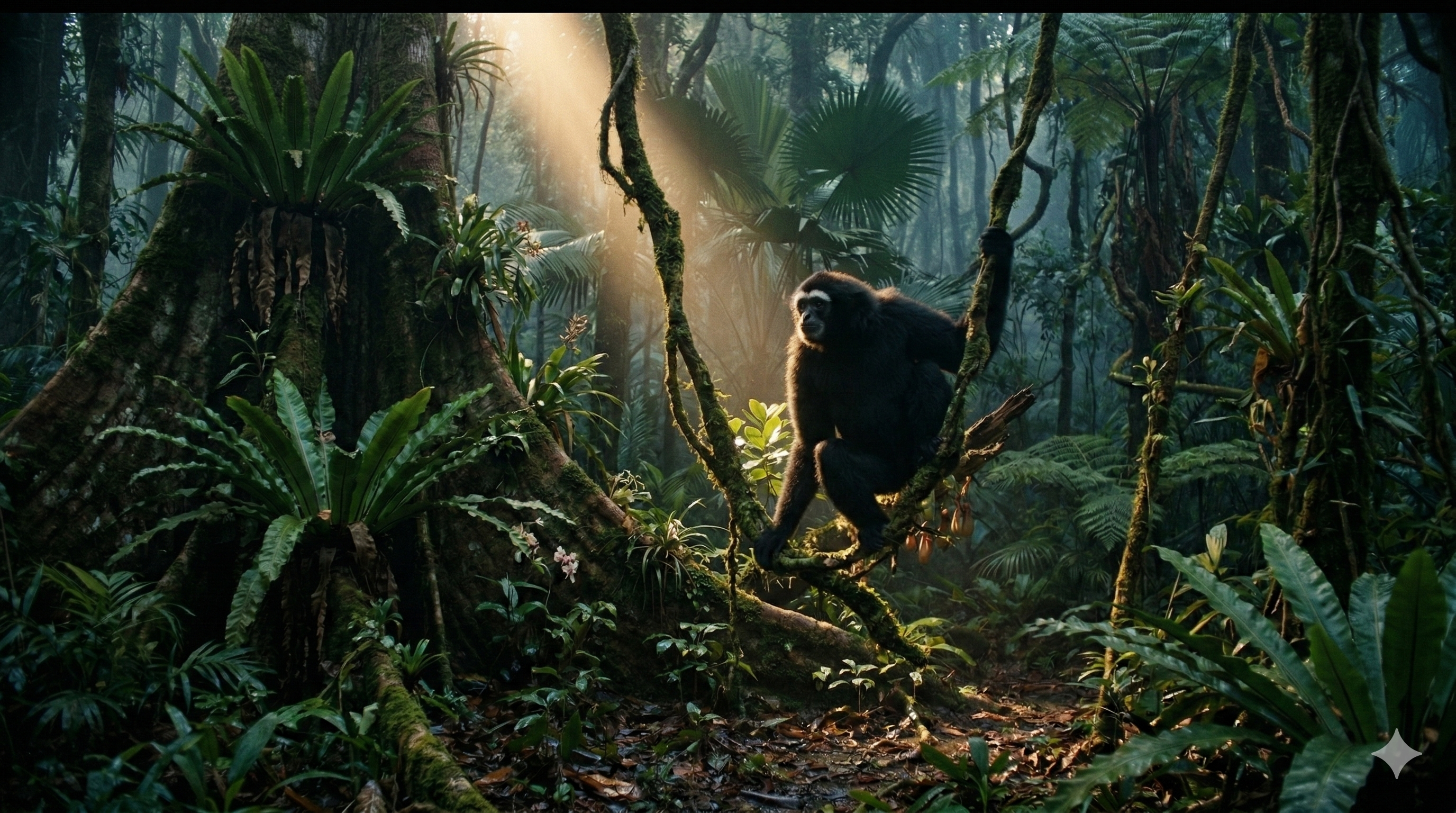
Kloss's Gibbon
"Bilou"
Monogamous pair bonds. Dawn song audible up to 2 km. Population in steep decline due to habitat loss and hunting.
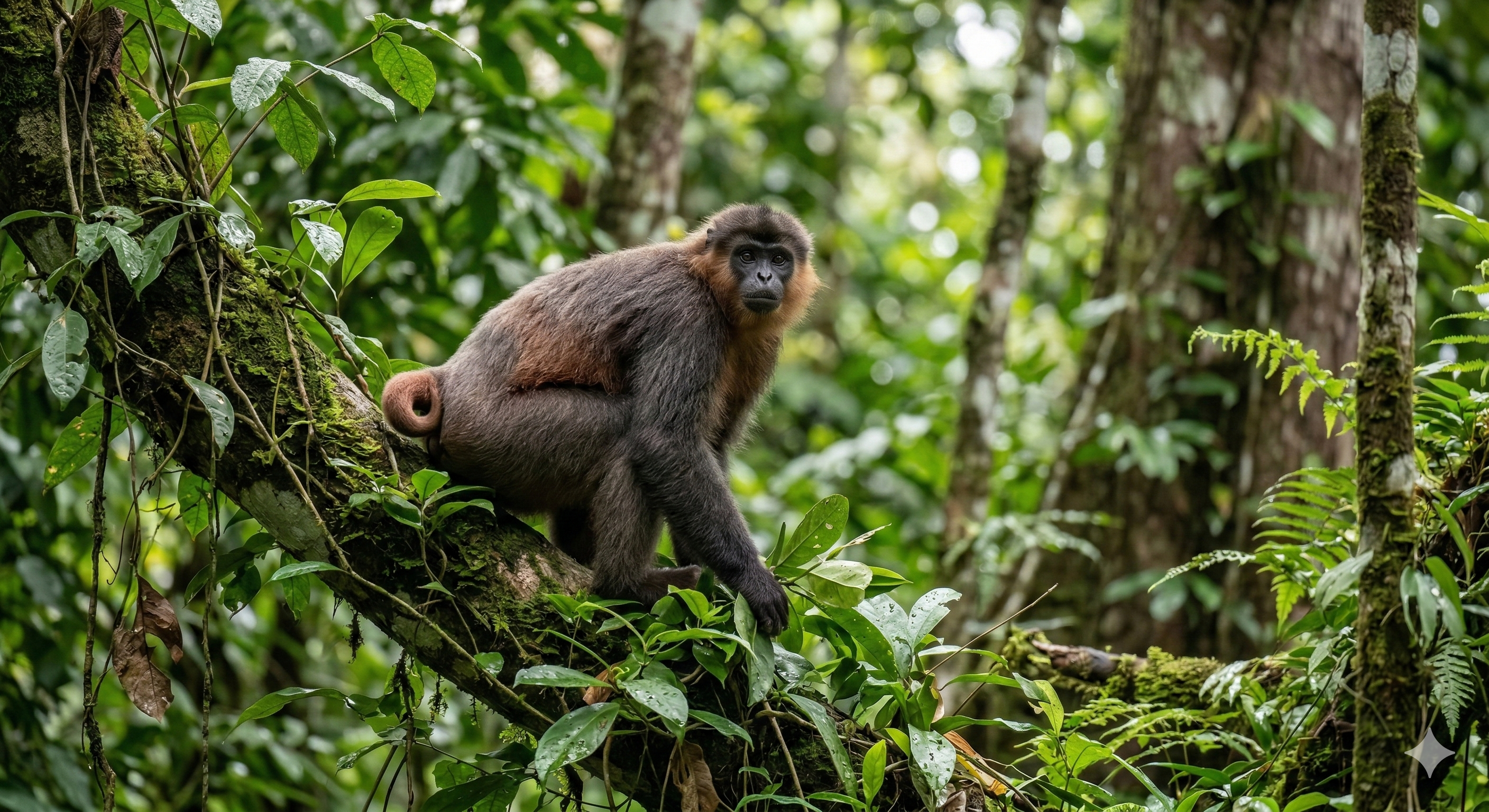
Pig-tailed Snub-nosed Monkey
"Simakobu"
One of the rarest primates on earth. Strictly folivorous — entirely dependent on undisturbed primary forest.
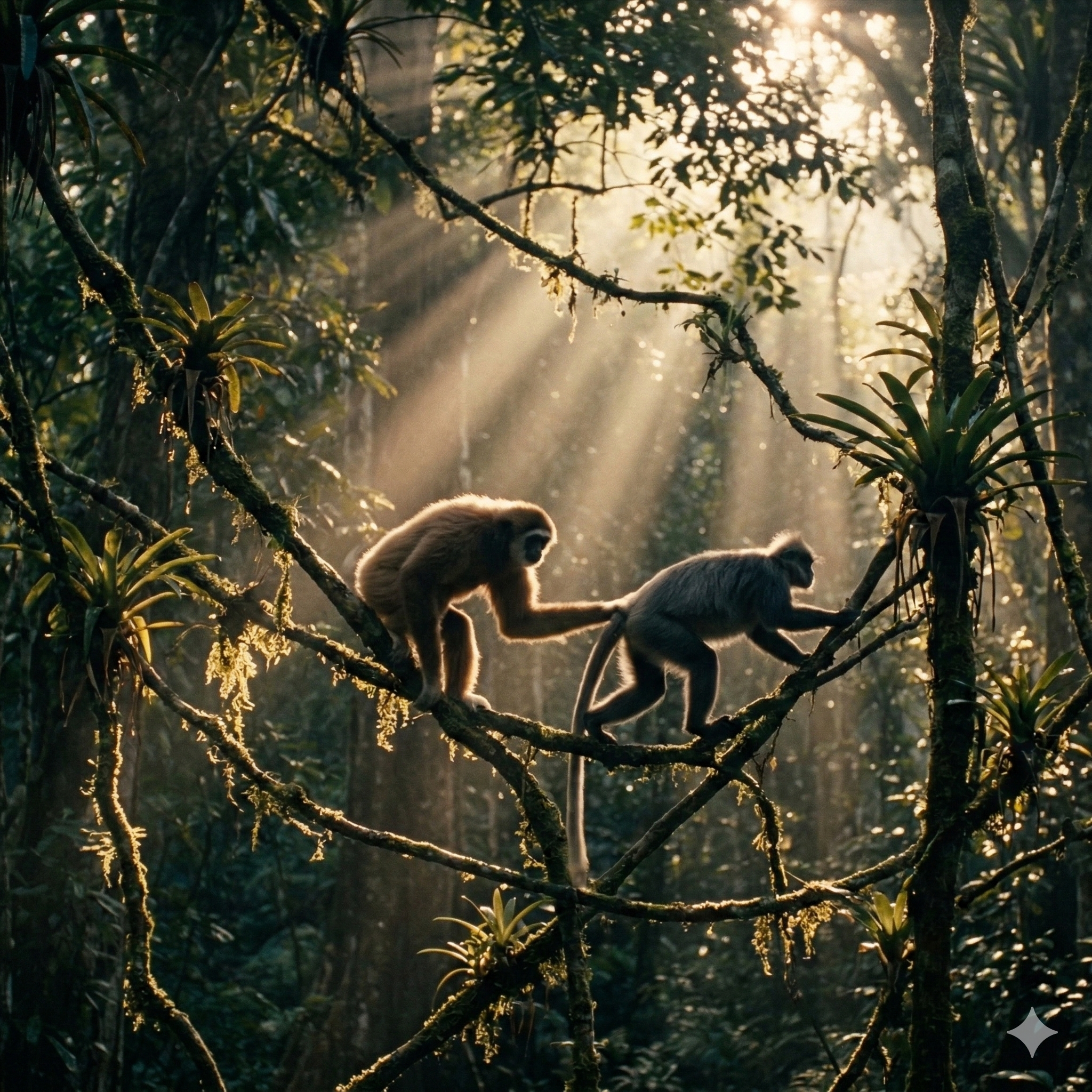
Mentawai Leaf Monkey
"Joja"
Highly arboreal. Infant coat coloration is a striking orange — unusual in the leaf monkey family.
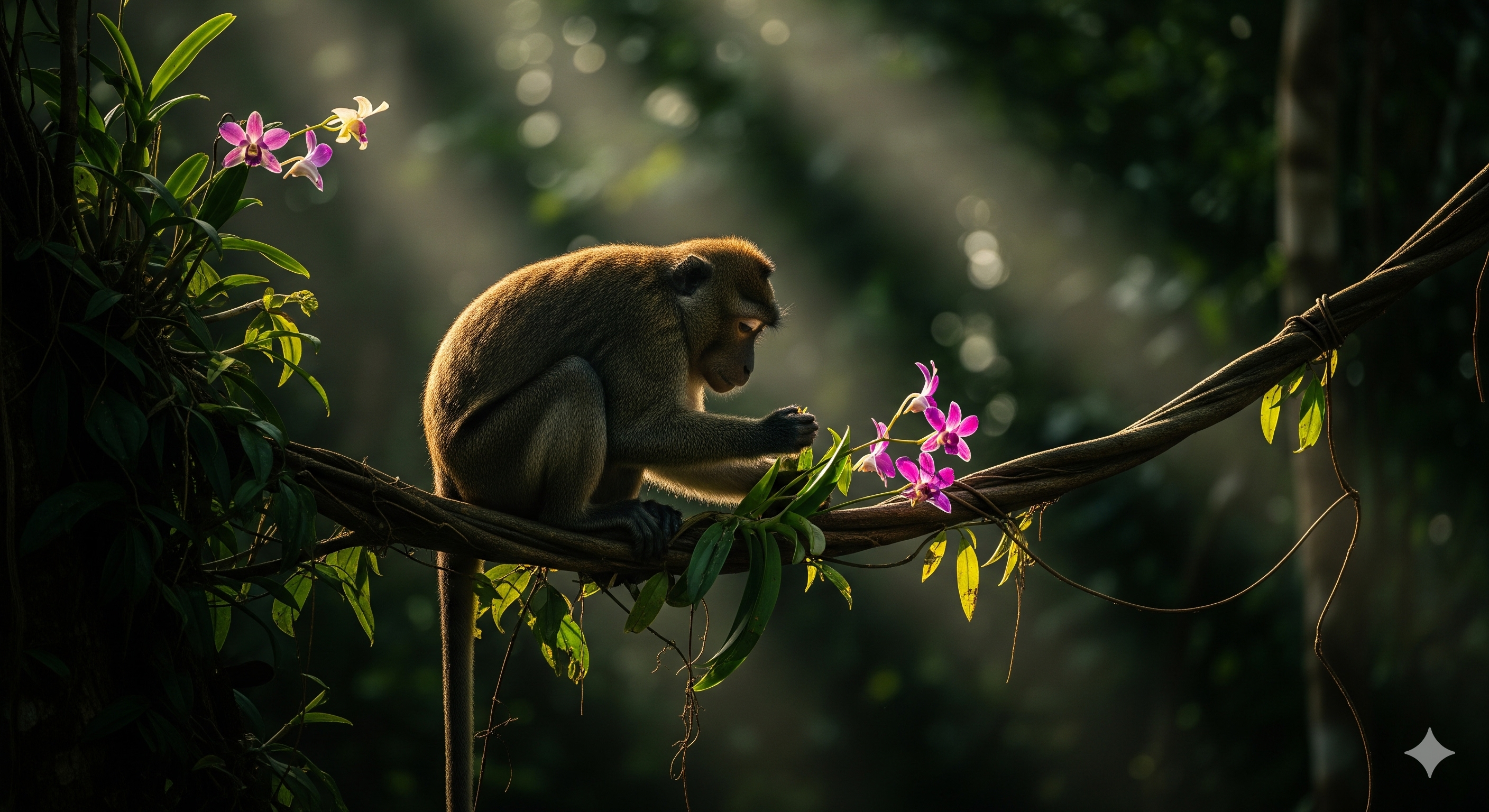
Mentawai Macaque
"Bokkoi"
Keystone seed-disperser — essential to forest regeneration. Hunted throughout the island for subsistence.
Planned Infrastructure
Siberut Primate Research & Rehabilitation Centre
A permanently staffed research station within the expanded National Park boundary, designed to operate in collaboration with international primate conservation bodies and Indonesian scientific institutions.
Rescued, confiscated, and injured primates will be rehabilitated on-site before return to protected habitat. Long-term population monitoring will generate the data baseline necessary to measure ecosystem recovery as MCF's land protection programme takes effect.
Field Research Station
Permanent scientific presence for population monitoring and ecological research
Rescue & Rehabilitation
Intake, veterinary care, and habitat reintroduction for confiscated and injured primates
Anti-Hunting Programme
Community-embedded education and livelihood alternatives targeting subsistence hunting pressure
International Partnerships
Collaboration with IUCN Primate Specialist Group and Indonesian LIPI scientific bodies
Recognition alone
cannot protect it.
Despite its UNESCO status and National Park designation, the eastern half of Siberut remains entirely unprotected — and actively under threat.
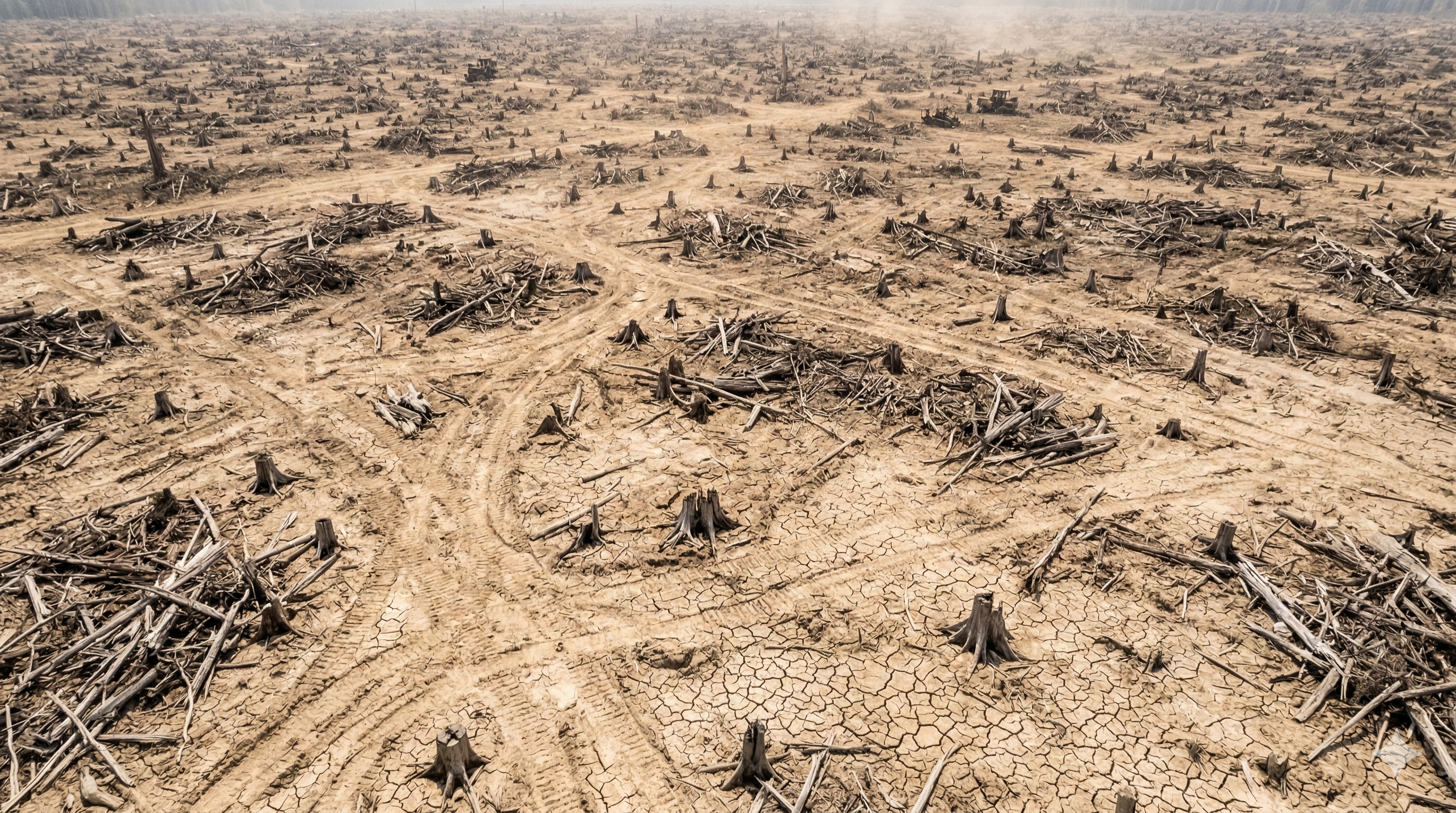
Active Logging Concessions
Commercial logging operations continue to operate within the unprotected eastern portion of the island. Concession holders maintain legal rights to fell timber in areas of critical biodiversity significance.
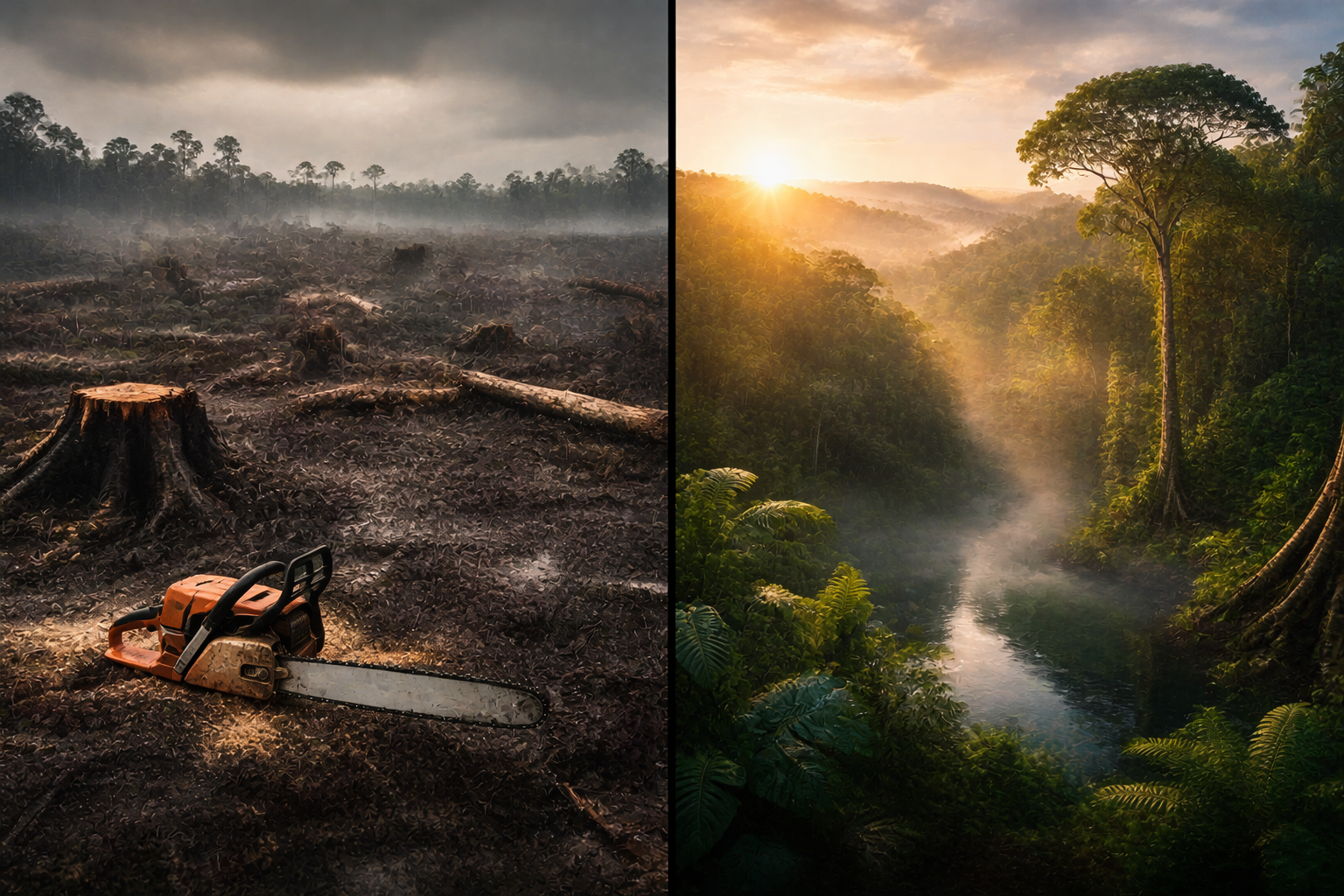
Habitat Fragmentation
Roads and clearings cut across previously contiguous forest corridors, isolating wildlife populations and reducing genetic diversity in endemic species already under population stress.
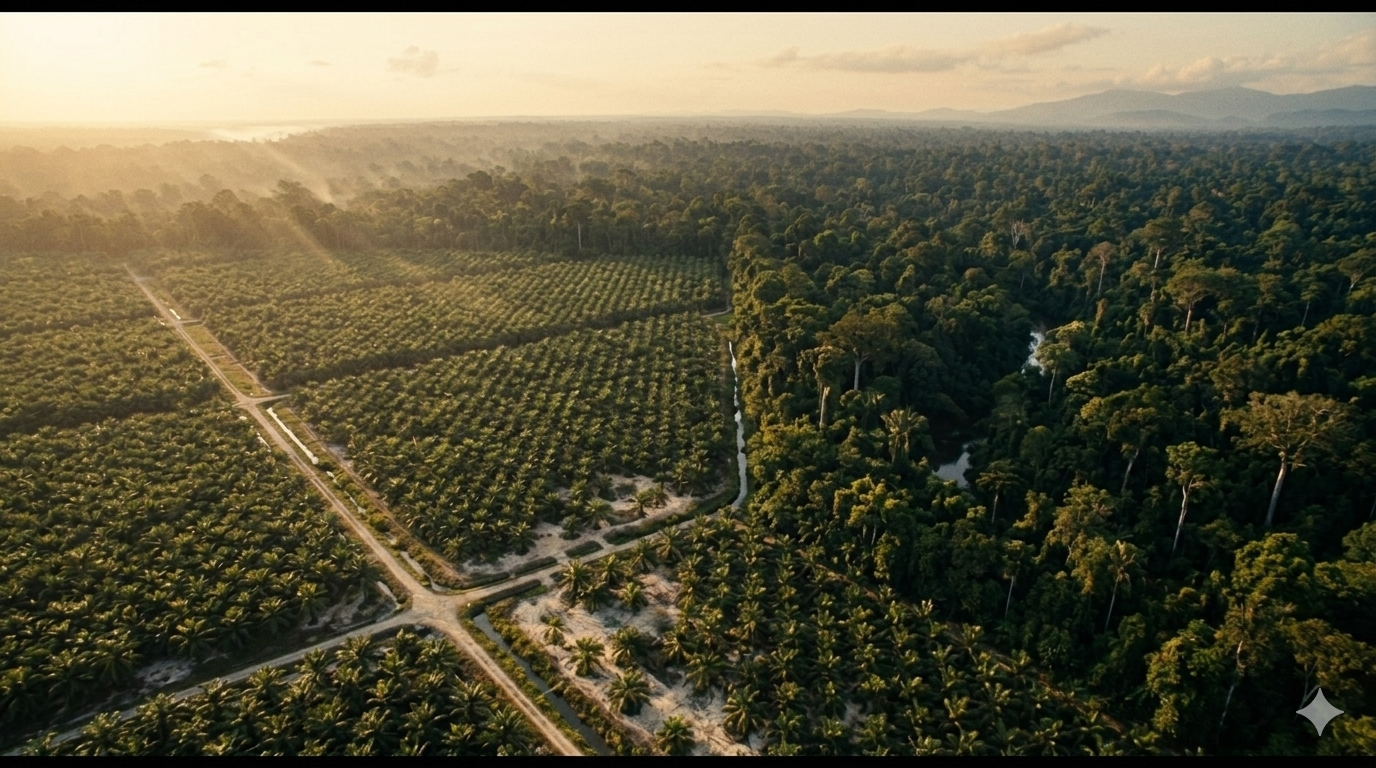
Plantation Conversion
Degraded logging areas are progressively converted to monoculture plantation, permanently displacing primary forest ecosystems and the species that depend on them.
The Protection Gap
52% of Siberut is unprotected today.
If the trajectory of logging and land conversion continues, the island's ecological balance will face irreversible degradation within a generation. The window for intervention is now.
Current coverage
The 85% Mandate.
As MCF completes its registration, we are preparing to execute one of the most ambitious conservation interventions in Southeast Asian history — powered by the Torqua Green Reserve and mainland industrial covenants.
Expand the National Park to 85%
We are laying the legal and financial groundwork to systematically acquire threatened logging concessions and expand the protected National Park and UNESCO Biosphere boundaries from 48% to encompass 85% of Siberut Island.
Protected coverage
Rewild the Rainforest
MCF will fund the complete cessation of all commercial logging operations within a decade, initiating an active rewilding programme to restore 50,000 hectares of previously degraded logging concession areas back to primary forest.
Active rewilding target
Marine Sanctuary Expansion
Conservation does not stop at the shoreline. MCF will fund the expansion of strictly enforced marine sanctuaries and No-Take Zones from roughly 12% to 65% of the Mentawai administrative marine waters.
Marine sanctuary coverage
Not Just Preservation — Restoration
We are not here to halt the destruction.
We are here to reverse it.
The Mentawai Conservation Foundation will bring the Siberut Biosphere Reserve back to life — through systematic funding, legal protection, and community stewardship that outlasts any single administration.